

Iran is bracing for a potential attack as the United States deploys key military assets, including an air carrier and additional bombers, to the Middle East.
US President Donald Trump has threatened to strike the Islamic republic over its bloody crackdown on anti-government protesters. If Trump authorizes military action, Tehran would be virtually powerless to stop an aerial attack, experts say.
But that does not mean Iran cannot retaliate against US military and commercial assets in the region, experts say, citing Tehran's formidable arsenal of advanced ballistic and low-flying cruise missiles as well as combat and suicide drones.
During the 12-day war last June, Israel hit Iran's military infrastructure, including missile-production centers. Israel's attack also weakened the ability of Iran, which has an aging air force, to fend off aerial assaults by targeting its radars and Russian-made S-300 air-defense systems.
Even then, Tehran was still able to fire hundreds of ballistic missiles at Israel. Dozens of the missiles, aimed mostly at military sites, penetrated Israel's formidable air defenses.
"In terms of purely defensive capabilities, Iran is practically naked," said Michael Horowitz, an independent defense expert based in Israel.
But Iran "still has a large arsenal of short and medium range missiles that can easily hit US bases in the Middle East, as well as cruise missiles and drones that it would likely use to try and target US ships," added Horowitz.
SEE ALSO:
Live Blog: Iran 'Can't Be Negotiated With,' Says Pompeo
'Potent' Ballistic Missiles
In June, Israelstruck sitesaround Tehran, including the Parchin military complex, the Khojir military base, the Shahrud missile site, and a factory in the Shamsabad Industrial Zone.
The strikes were aimed at hindering Iran's production of medium-range ballistic missiles that threaten Israel and are "fairly potent," said Sascha Bruchmann, a military and security affairs analyst at the London-based International Institute for Strategic Studies.
Many of the medium-range ballistic missiles are "liquid-fueled and rely on infrastructure to be loaded, fueled, and launched," said Bruchmann. "The Israelis used this fact to find them and destroy many launchers during the war."
The number of Iranian launchers still operational is unclear.
Iran also possesses short-range ballistic missiles that are "often solid-fueled, much more flexible, and thus more difficult to detect before launch," added Bruchmann, estimating that Tehran has several thousand of the missiles.
SEE ALSO:
Gregory Brew: Iran's Clerical Rulers Likely To Survive Protests, But 'Gradual' Collapse Looms
He said the short-range missiles "constitute a real threat, especially for the smaller Gulf countries" like Qatar and Bahrain that house US bases and forces.
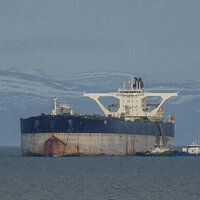
Beyond its weapons, one of Iran's most potent tools is its ability to disrupt oil traffic in the Persian Gulf, a region that produces around 40 percent of the world's oil, experts say.
About one-fifth of the world's oil supply flows through the Strait of Hormuz, a narrow waterway connecting the Persian Gulf to the open ocean. Iran has previously considered closing the route, a move that would disrupt global oil flows.
"The Islamic republic has long prepared a set of military assets meant to shut down this key maritime route. This would create an economic shock that Iran could exploit," said Horowitz.