

Welcome back to The Farda Briefing, an RFE/RL newsletter that tracks the key issues in Iran and explains why they matter.
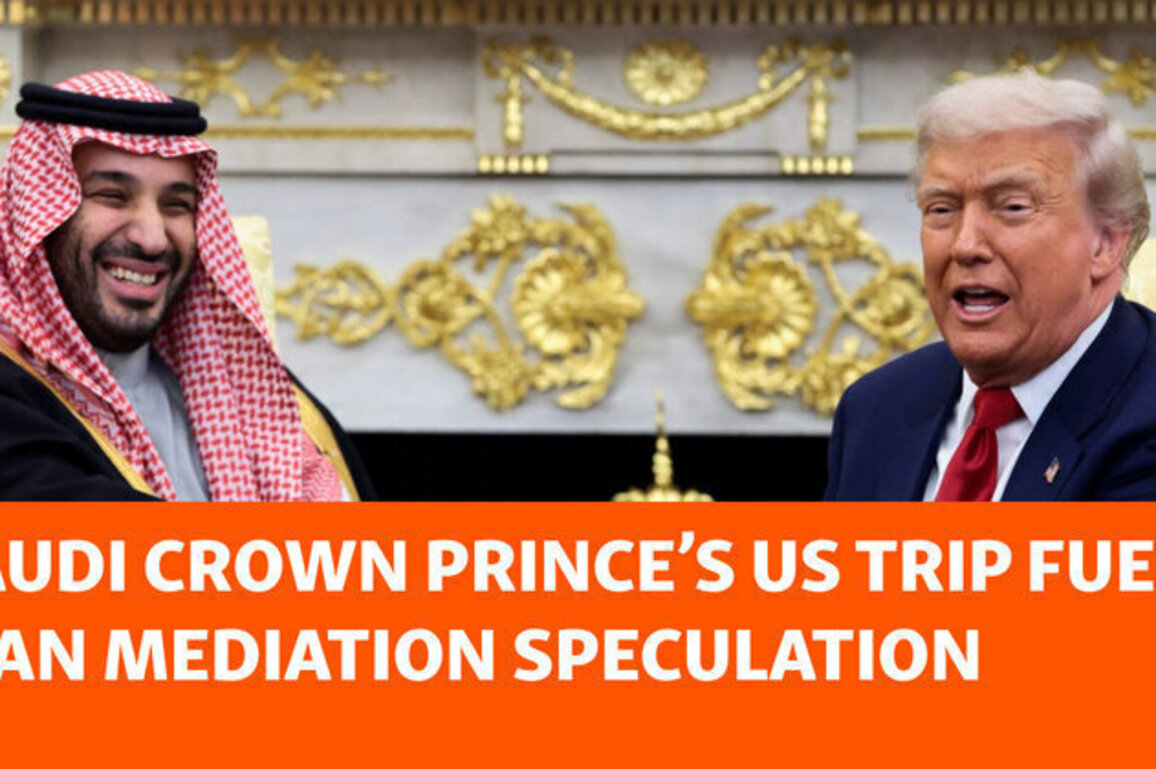
I'm RFE/RL correspondent Kian Sharifi. In this edition, I'm looking at speculation about the Saudis facilitating talks between Tehran and Washington over Iran's nuclear program.
What You Need To Know
Saudi Mediation Role Back In The Spotlight:Nine months after reports firstemergedthat Saudi Arabia is interested in facilitating talks between the United States and Iran, Saudi Crown Prince Muhammad bin Salmans trip to Washington has again put Riyadhs potential for mediation in the spotlight.
Family SaysIran Detains 70-Year-Old US Citizen:Iranian-American dual citizen Afarin Mohajer has been detained in Tehran in what her son, US-based political activist Reza Zarrabi, describers as a kidnapping. Speaking to RFE/RLs Radio Farda, Zarrabi said his 70-year-old mother was arrested on a slew of charges, including propaganda against the establishment and forming an opposition group. He insisted that Mohajer was detained because of his activism and added that she has had no political activities.
Tehran Voids Cairo Agreement After IAEA Resolution: Irans Foreign Minister Abbas Araqchi this week said atechnical agreementwith the International Atomic Energy Agency (IAEA), which was signed in Cairo in September, was terminated after the IAEA Board of Governors passed a resolution pressing Iran to clarify the status of its enriched uranium stockpile. Iran says its roughly 400 kilograms of highly enriched uranium is buried in facilities that were struck by the United States in June.
The Big Issue
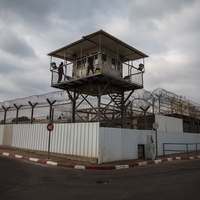
This image taken in February 2007 shows a technician at the uranium conversion facility in Isfahan, which was bombed by the United States in June 2025.
The Riyadh Route
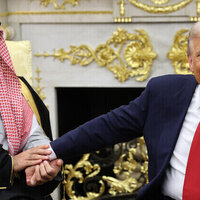
Saudi Crown Prince Muhammad bin Salmans November 18 visit to the White House -- his first in seven years -- has sparked widespread speculation about Saudi Arabia offering to facilitate dialogue between Washington and Tehran on nuclear negotiations.
Hosting bin Salman, US President Donald Trump said he is open to a deal with Iran, which he said wanted an agreement very badly.
Saudi Arabias de facto leader, meanwhile, talked up his countrys close relations with the United States and said Riyadh will do our best to make an agreement with Iran happen.
A day before the trip, Iranian President Masud Pezeshkian sent a letter to bin Salman that led many to believe he was relaying a message to Trump. Iran's government has formally dismissed the speculation, insisting that the letter focuses on bilateral relations. But the timing is curious.
Why It Matters: Saudi Arabia has strong incentives to pursue this mediation role, particularly now that Iran's proxy network has been weakened.
The kingdom is concerned that a cornered Iran might accelerate nuclear weapons development, and Riyadh sees a new nuclear agreement as preventing that scenario.
Additionally, Saudi foreign policy has pivoted toward prioritizing economic objectives, and further regional instability would hinder these goals. By positioning itself as a mediator, Saudi Arabia can subtly distance itself from Trump's maximum pressure strategy against Tehran while maintaining its strategic alliance with Washington.
Crucially, Riyadh and Washington signed an initial agreement that serves as a precursor to a deal on the transfer of American civil nuclear technology to Saudi Arabia.
By securing its own nuclear cooperation pathway with the United States, Riyadh can afford to support measured negotiations that give Iran limited enrichment under tight inspection regimes --so long as the kingdom receives equivalent rights.
What's Being Said:Oman and Qatar have traditionally served as mediators between Iran and the United States, but some, including former Iranian diplomat Hamid Abutalebi, believe it is time to let the Saudis facilitate talks.
In a message to Pezeshkian, Abutalebi said the government is facing a historic responsibility and must seize this strategic opportunity to ease economic pressures, bring stability to the Middle East, and pave the way for a return to sustainable equilibrium with America and Saudi Arabia.
Middle East analyst Bahman Akbari argued that Saudi Arabia's strengthened ties with Washington through the preliminary nuclear agreement and defense partnership with the United States don't prevent -- and may actually enable -- its role as a credible intermediary between Tehran and Washington.
Saudi Arabia's potential as a mediatorcreates the possibility of reaching a significant agreement, he told the Reformist newspaper Etemad.
Meanwhile, Kamal Kharrazi, head of Irans Strategic Council on Foreign Relations and senior adviser to Supreme Leader Ayatollah Ali Khamenei,toldCNN this week that Tehran is open to talks with Washington, but that Iran would not negotiate over its missile program.
They have to make the first move, Kharrazi said. It is only the nuclear issue we will discuss with the United States.
That's all from me for now.
Until next time,
Kian Sharifi
If you enjoyed this briefing and don't want to miss the next edition, subscribehere. It will be sent to your inbox every Friday.