

Despite numerous regional and international diplomatic initiatives, the security situation remains critical in the eastern Democratic Republic of Congo (DRC), the Security Council heard on Wednesday.
Recent severe flooding caused by torrential rains has displaced nearly 10,000 people in Tanganyika province in the Democratic Republic of the Congo (DRC), the UN refugee agency, UNHCR, said on Tuesday.
Sexual violence against children in eastern Democratic Republic of the Congo (DRC) has reached staggering proportions, with the UN Childrens Fund (UNICEF) reporting thousands of new cases in just two months evidence that its being used as a systemic weapon of war and deliberate terror tactic.
In a briefing to ambassadors, UN Special Envoy for the Great Lakes Region Huang Xia called for increased coordination of peace processes.
He noted that the Congo River Alliance-M23 rebel group has continued its territorial expansion. This is happening despite calls from theSecurity Council, regional and sub-regional organizations in Africa, and the European Union, and in the face of restrictive measures and sanctions.
Furthermore, a ceasefire in not yet effectively in force, violations are ongoing, and the humanitarian crisis is deepening both in the DRC and neighbouring countries such as Burundi, Uganda and Rwanda, which have seen an increase in Congolese refugees.
This somber reality means that we have to strive to redouble efforts, to see how together we can transform recent political and diplomatic progress into an irreversible shift to peace, he said.
Diplomatic developments
Mr. Xia welcomed the recent dynamics surrounding the so-called Nairobi and Luanda processes, supported by the African Union (AU), the East African Community (EAC) and the Southern African Development Community (SADC).
EAC and SADC leaders adopted a roadmap on 24 March and appointed a facilitators group that includes two African women, marking significant progress.
The Special Envoy also paid tribute to Angolan President Joo Loureno, who also heads the AU, for his efforts under the Luanda process to lift Rwandas defensive measures against the DRC and to neutralize the Democratic Forces for the Liberation of Rwanda (FDLR) armed group.
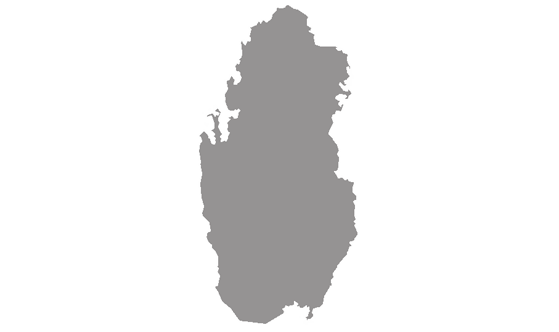
The Special Envoy also acknowledged the Doha initiative, led by Qatar, welcoming a meeting last month between the Presidents of the DRC and Rwanda as well as consultations between delegations from the two countries and the M23.
All these efforts show that peace is still possible, said Mr. Xia.
In this same vein, he welcomed a new resolve by the Congolese government to engage directly with the M23 as an important step.
Given the serious nature of the crisis, obtaining an immediate unconditional ceasefire and reaching agreement on reopening humanitarian corridors should, in my opinion, be the primary issue on the agenda of discussions between all parties concerned, he added.
UNICEF/Jospin BenekireA displaced family sit in front of their makeshift shelter in Goma, North Kivu province, DR Congo.Enhanced coordination critical
Mr. Xia, however, stressed the need to strengthen coordination between international and regional initiatives which would help to harness the comparative advantages of each approach and the achievements that have already been made, in order to create complementarity and a unity of vision.
He warned that peace efforts will not be enough without political resolve to tackle the root causes of chronic instability in the region.
What weve seen to date is that there is competition in terms of political ambitions and security ambitions, and these have been openly stated in terms of strategic areas of interest, he said.
They have been upheld by the existence of multiple armed groups. There has been the illegal exploitation of natural resources, and also we see the absence of the state's authority in these areas.
The Special Envoy urged the Council to tap into its influence and to use all levers at its disposal to support the ongoing peace processes, while underlining that his Office would continue to support economic, security, and judicial initiatives between countries in the Great Lakes region.
Rise in violations against children
The head of UN Childrens Fund (UNICEF) also briefed the Council, warning that intensifying violence in the eastern DRC has created one of the worlds worst humanitarian crises, putting millions of young lives at risk.
There has been a 100 per cent increase in verified grave violations in the first quarter of this year, as compared to the first quarter of 2024, Executive Director Catherine Russellsaid.
These include indiscriminate attacks, large-scale recruitment and use of children, collective abductions of children, as well as widespread sexual violence.
Since January, violence has displaced more than one million people in Ituri, North Kivu and South Kivu provinces, including an estimated 400,000 children.
This is on top of the five million people already living in displacement camps, where crowded and unsanitary conditions make the spread of diseases like mpox, cholera and measles much more likely.
She noted that the rate of sexual violence against children has reached "shockingly high levels. More than 40 per cent of the nearly 10,000 cases of rape and sexual violence reported in January and February involved children.
UNICEF estimates that during the most intense phase of this years conflict in eastern DRC, a child was raped every half an hour, she reported.
Accountability, protection and hope
Meanwhile, UNICEF continues to provide drinking water to nearly 700,000 people per day in the Goma region, while ensuring the distribution of medical kits, psychosocial support for traumatized children, and care for unaccompanied minors.
But needs far exceed capacity and the agency only received 20 per cent of the funds requested last year.
UNICEF recently launched an urgent appeal for nearly $57 million for the next three months and Ms. Russell cautioned againstinaction.
If we fail to act with urgency, we condemn a generation of children to fear, to trauma, and to a future defined by violence, she said.
But if we stand together for peace, accountability, and protection, we offer these children something else: Hope.
UNICEF/Jospin BenekireA displaced family sit in front of their makeshift shelter in Goma, North Kivu province, DR Congo.